Nonfat milk nutrition matters to global buyers because a pale, familiar product can carry very different commercial value across markets. USDA FoodData Central reports that one hundred grams of typical fluid nonfat milk provides about 34 calories, 3.4 grams of protein, 5 grams of carbohydrate, and nearly 122 milligrams of calcium. It also contains very little fat. These figures offer a practical reference, not a universal guarantee. Fortification, processing, and serving sizes can change the label.
The OECD-FAO Agricultural Outlook 2025–2034 presents dairy as a growing agricultural category, with demand influenced by population, income, feed prices, and regional consumption habits. The International Dairy Federation’s World Dairy Situation reports also emphasize productivity, sustainability, and supply-chain resilience. Buyers should connect those broad trends with container-level evidence. Check certificates of analysis, microbial limits, vitamin levels, shelf life, and cold-chain requirements before contracting. A carton that performs well in a European supermarket may need different labeling or fortification in Southeast Asia, Africa, or the Middle East. Rules differ. Sometimes the paperwork is harder than the milk.
This guide examines protein, calcium, calories, vitamins, allergen information, and purchasing risks. It also considers powder versus liquid formats, because transport weight changes the cost equation. Nutrition should not be judged by fat content alone. Consumers may seek weight management, sports recovery, affordable protein, or familiar taste. Those needs overlap, but they are not identical. Reliable sourcing requires current laboratory data and transparent supplier communication. No single report captures every market. That limitation deserves attention, especially when buyers compare prices across borders.
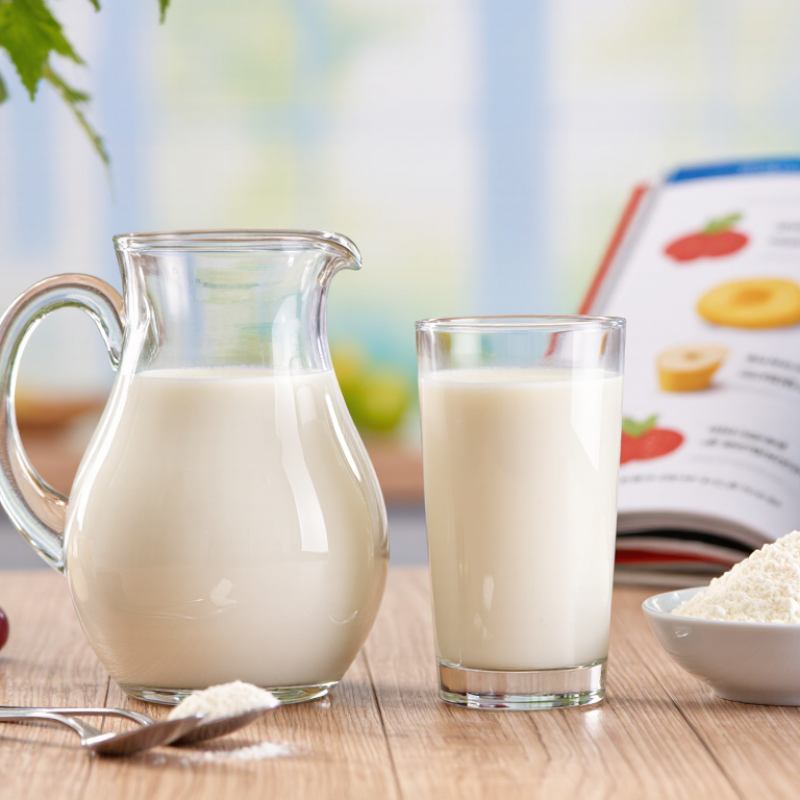
Nonfat milk is milk with most milk fat removed, not a fat-free food in every legal sense. In the United States, the standard allows no more than 0.5% milkfat, according to 21 CFR 131.125. Codex Standard CXS 206-1999 uses the same 0.5% maximum for skimmed milk. Names still vary. Buyers may see skim milk, fat-free milk, or nonfat milk on different markets.
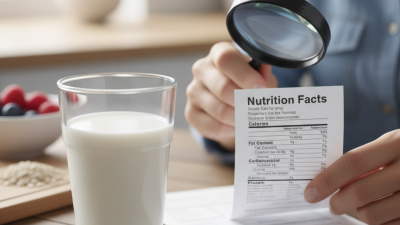
Its main nutrients are lactose, milk proteins, calcium, and water. USDA FoodData Central reports about 34 calories, 3.4 grams of protein, and 5 grams of carbohydrate per 100 grams of fluid nonfat milk. Natural calcium is close to 120 milligrams per 100 grams. Values change after fortification, filtration, or reconstitution. A label needs closer inspection.
Global product categories include chilled fluid milk, UHT nonfat milk, skim milk powder, instant powder, and lactose-reduced products. Skim milk powder usually contains about 34% protein and no more than 1.5% milk fat under Codex CXS 207-1999. However, specifications can differ by destination, especially for moisture, heat treatment, additives, and vitamin fortification. For procurement, compare the certificate of analysis with the local standard, not only the product name. This sounds obvious. It is often missed. USDA data also show that nutrient databases use standardized samples, while commercial batches may shift with feed, season, and processing. That limitation deserves attention when building a global nutrition guide.
This chart compares representative macronutrient values per 100 g of liquid milk across common global product categories. Nonfat milk contains about 0.1 g of fat, 3.4 g of protein, and 5.0 g of carbohydrate per 100 g. Actual values may vary by country, fortification requirements, processing method, and applicable standards such as Codex or national dairy regulations.
Reference basis: USDA FoodData Central generic milk entries; values are rounded and intended for product comparison, specification review, and buyer education.
USDA FoodData Central lists plain nonfat milk at about 34 calories per 100 g. It provides approximately 3.4 g of protein, supporting everyday dietary planning. Fat remains very low, near 0.1 g, while carbohydrates reach about 5 g. The figures describe liquid milk, not nonfat milk powder. That distinction matters during international purchasing.
Mineral values are also useful for product comparison. A 100 g serving supplies roughly 123 mg of calcium, 101 mg of phosphorus, and 150 mg of potassium. Sodium is approximately 42 mg. Fortified products may contain added vitamin D, but levels differ by country and processing method. USDA values offer a reliable reference, not a guarantee for every shipment. Heat treatment, fortification, storage, and laboratory methods can change the final result. I would not treat one database entry as a complete specification.
Tips: Request a current certificate of analysis before purchasing. Compare results on the same 100 g basis. Check whether values describe liquid milk or reconstituted powder. Review calcium, protein, moisture, and vitamin D separately. Also confirm local labeling rules and serving-size conversions. A small unit error can distort a large tender. When nutrition data looks unusually precise, ask how it was measured.
Nonfat milk quality begins with controlled fat removal, not a marketing claim. Codex Standard CXS 207-1999 sets skimmed milk powder at no more than 1.5% milk fat. It also sets moisture at no more than 5%. These limits affect flavor, flowability, and storage stability. Buyers should request test results for fat, moisture, protein, acidity, and insoluble particles. A bright white powder can still hide poor reconstitution performance. I have seen samples dissolve slowly when processing heat was too aggressive. That detail deserves attention.
Fortification adds nutritional value, but it can also create new risks. Vitamin A and D levels should match the destination country’s rules and the product label. Codex guidance and national food standards do not always use identical limits. Confirm the permitted nutrient form, dosage, and declaration method before purchase. Packaging also matters. The FAO dairy processing guidance links oxygen, moisture, light, and heat with nutrient loss and flavor defects. A validated shelf-life study should support every stated date. Eighteen months may be realistic for one powder, but not another. Supplier confidence is not evidence.
Tips: Request recent certificates of analysis and independent laboratory verification. Check package seals, warehouse temperature, and pallet conditions. Ask for real-time shelf-life data, not only accelerated testing. Review Salmonella, Cronobacter, heavy-metal, pesticide, and antibiotic-residue controls. USDA and Codex references can guide specifications, but local authorities remain decisive. Expect small inconsistencies, and investigate them.
For 2026 sourcing, nonfat milk remains nutritionally useful, but compliance controls market access.
USDA FoodData Central reports about 34 kcal, 3.4 grams of protein, and 123 milligrams of calcium per 100 grams. Values vary with fortification and processing. Buyers should request the product specification, not rely on generic nutrition tables.
Codex and United States Requirements
Codex Standard 206-1999 defines milk terms and composition expectations. Codex General Standard 1-1985 guides ingredient, allergen, date, and storage labeling. In the United States, FDA rules require the common name, nutrition facts, milk allergen declaration, net quantity, and safe-handling information where applicable.
Pasteurization and Import Review
The FDA Pasteurized Milk Ordinance also sets pasteurization and microbiological controls for Grade A milk. A label can look correct and still fail during import review.
European Union Shipments
European Union shipments require Regulation 1169/2011 nutrition labeling, usually per 100 milliliters. Milk must appear clearly as an allergen. Hygiene controls follow Regulations 852/2004 and 853/2004, while Regulation 2073/2005 addresses microbiological criteria.
Testing Scope
Testing should cover pathogens, aerobic colony counts, coliforms, residues, and temperature records.
Traceability and Documentation
The International Dairy Federation’s World Dairy Situation reporting shows continued pressure for stronger traceability and food-safety verification. Documentation is often the weak point. Lot codes, certificates, and laboratory methods may not align. A pre-shipment document audit is wise, though it cannot replace official border testing.
Global buyers should request a complete nutrition specification for nonfat milk before comparing offers. Check protein, lactose, moisture, minerals, calories, and maximum fat levels. A typical certificate of analysis should show batch number, test date, methods, and laboratory approval. Ask for recent production results, not only standard ranges. Small differences can affect beverage texture and reformulation costs.
Supplier evaluation needs practical evidence. Review HACCP, ISO 22000, GMP, traceability, and export-related certifications. Confirm each certificate’s scope, issuing body, and expiry date. An audit report can reveal more than a polished presentation. Check factory capacity, raw milk controls, allergen handling, and recall procedures. A spreadsheet can still mislead. I would also request three batch records, because one sample may hide seasonal variation.
Pricing depends on milk solids, energy, spray-drying costs, packaging, freight, currency, and order volume. Compare the full landed cost, not just the quoted price. Clarify minimum order quantity, pallet design, shelf life, and storage conditions. Under Incoterms 2020, define responsibility for insurance, customs clearance, and transport risk. Payment terms, inspection rights, delivery windows, and claims procedures should be written clearly. A lower price may reflect weaker documentation or longer lead times. That deserves careful questioning.