Skip to content

7 Best Fairlife Milk Nutrition Label Facts for Buyers

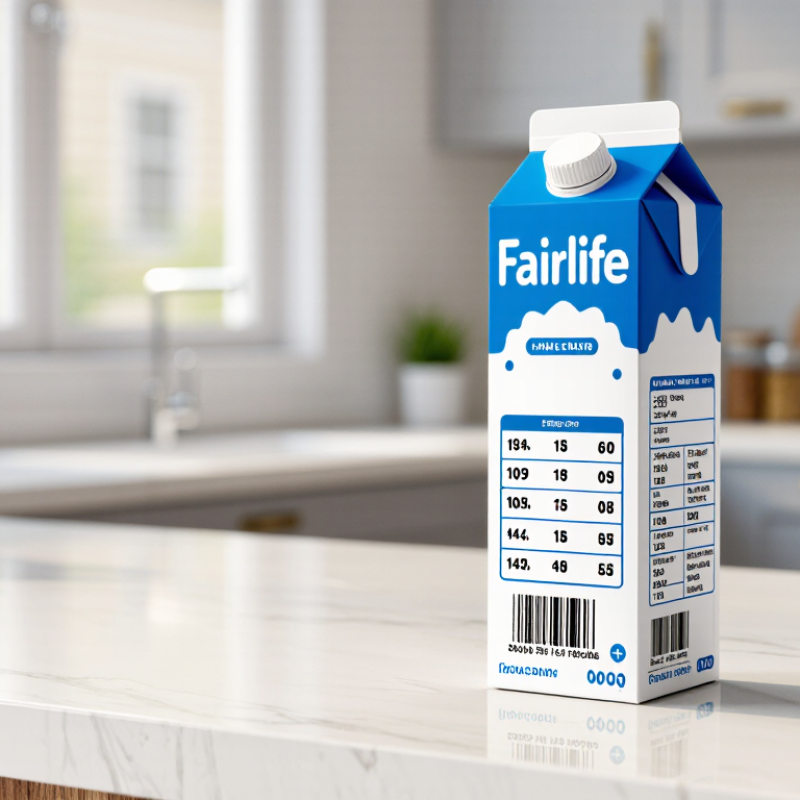
A carton can look simple, yet its nutrition panel answers several different questions. The fairlife milk nutrition label can help buyers compare serving size, calories, protein, sugars, and saturated fat. But numbers mean little without context. A flavored product and an unflavored one may show different amounts, so check the exact carton in your hand.

Food-systems writer Michael Pollan is known for the advice, “Eat food. Not too much. Mostly plants.” It is a broad guide, not a milk-specific rule. Still, it offers a useful reminder: one nutrition number cannot judge an entire food. Compare the label with your needs, your usual meals, and the product’s ingredient list. Look closely. Serving sizes can be easy to overlook, and package designs may make similar products seem interchangeable. They are not always. This guide highlights seven practical label facts, including how to read protein and sugar figures without treating either as a health verdict. Some details are straightforward; others depend on the product and the person buying it. That deserves a second look. A label can inform a choice, but it cannot make the choice for you.
7 Best Fairlife Milk Nutrition Label Facts for Buyers

How Ultrafiltration Affects Fairlife Milk’s Protein and Lactose Content

Ultrafiltration passes milk through fine membranes that separate some water and small dissolved components from larger proteins and fat. Lactose is a small sugar, so some can pass through too. The retained milk components are then combined or adjusted to make the finished product. The exact process can vary.

That changes the numbers per cup. With less lactose and water relative to retained protein, a serving can contain more protein and less sugar than ordinary milk. The protein is concentrated, not created. A higher protein figure may matter if you compare labels for a smoothie or breakfast, but serving sizes must match.

Check the nutrition panel. “Reduced lactose” does not always mean lactose-free, and people with lactose intolerance can differ in what they tolerate. Small amounts may still cause symptoms. I would avoid assuming every filtered milk has the same values; recipes and serving sizes vary. Compare grams of protein, total sugars, and calories on the actual carton. It is an easy detail to miss.

Compare Protein per Serving with the FDA’s 50 g Daily Value

When comparing high-protein milk, check grams of protein per serving, not just the carton’s front label. The FDA’s Daily Value for protein is 50 grams, based on a 2,000-calorie diet. A serving with 13 grams provides about 26% of that reference; 15 grams provides 30%. That matters.

Use the same serving size when comparing cartons. One may list a cup, while another lists a different amount, making the protein numbers look less comparable than they are. Check the Nutrition Facts panel, too: calories, added sugars, and saturated fat can change how a choice fits your day. Small detail. The 50-gram Daily Value is a labeling benchmark, not a personal prescription; age, activity, health, and overall diet can affect individual needs. I used to focus on the biggest protein number, but that misses the serving size. It is an easy mistake, and labels do not always make comparisons feel simple. For a practical check, divide grams per serving by 50, then multiply by 100 to estimate the percent Daily Value. That gives buyers a clearer comparison without treating one number as the whole story.

7 Best Milk Nutrition Label Facts for Buyers — Compare Protein per Serving with the FDA’s 50 g Daily Value

A quick guide to typical nutrition facts for one cup (about 244 g) of plain whole cow’s milk. Values are approximate and may vary by product and fortification.

Typical Nutrition Facts per 1-Cup Serving
Nutrition fact Amount per serving Buyer’s comparison
Protein About 7.7 g Provides about 15% of the 50 g FDA Daily Value; rounded label amounts may show 8 g or 16% DV.
Calories About 149 kcal Useful for comparing energy per cup across milk types and serving sizes.
Total fat About 7.9 g Whole milk’s fat content contributes to its higher calorie total compared with lower-fat varieties.
Saturated fat About 4.6 g Approximately 23% of the 20 g Daily Value.
Total carbohydrate About 11.7 g Most of the carbohydrate in plain milk comes from its naturally occurring milk sugar.
Total sugars About 12.3 g Plain milk contains naturally occurring lactose; check the ingredient list for added sugars in flavored products.
Calcium About 276 mg About 21% of the 1,300 mg Daily Value.

Daily Value percentages use FDA reference amounts for adults and children aged 4 and older. Typical nutrient figures are rounded from USDA FoodData Central data for whole milk; check the product’s Nutrition Facts label for its exact values.

Assess Calcium Against the FDA’s 1,300 mg Daily Value

Calcium is one of the most useful numbers to check on a milk nutrition label. The FDA Daily Value is 1,300 milligrams, so the listed percentage helps put each serving in context. For example, 10% Daily Value equals 130 milligrams, while 20% equals 260 milligrams. Check the serving size beside the amount: a carton’s figures may describe one cup, not the whole container. Small print matters.

Tips: Compare calcium per serving, then consider how much you actually pour into a glass. If the label lists 25% Daily Value, that serving provides about 325 milligrams. A larger glass may provide more, but only if you drink the full amount. Calcium is not the only factor in choosing milk; dietary needs and other foods count too.

It is easy to focus on the biggest number and miss the serving size. I’ve done that with labels, especially when pouring quickly before breakfast. Also check whether the product’s calcium amount fits your routine rather than assuming one serving meets your daily needs. People with specific health concerns can ask a qualified health professional for personalized guidance.

7 Milk Nutrition Facts: Calcium Compared with the FDA Daily Value

Calcium per 1-cup serving, shown as an estimated share of the FDA’s 1,300 mg Daily Value (%DV).

Among these examples, sheep milk provides the most calcium per cup (about 473 mg, or 36% DV); the other types provide about 21–25% DV. Values are representative food-composition figures, rounded, and actual nutrition labels can vary. Check the product label for its serving size and calcium content.

Check Added Sugars Against the FDA’s 50 g Daily Value

When comparing milk nutrition labels, go straight to “Added Sugars.” The FDA’s Daily Value is 50 grams, based on a 2,000-calorie diet. On the label, 5% Daily Value or less is considered low; 20% or more is high. These figures help compare cartons, but they are not a personal allowance. Calorie needs differ.

Check added sugars separately from total sugars. Plain milk contains lactose, a naturally occurring sugar; it is not counted as added sugar. Flavored milk may contain both. For example, 12 grams of added sugar equals 24% of the FDA Daily Value. Small difference. The FDA’s Nutrition Facts labeling rules require added sugars to appear in grams and as a percentage of Daily Value. The USDA Dietary Guidelines also recommend keeping added sugars below 10% of daily calories; at 2,000 calories, that is under 50 grams.

Tips: Compare the same serving size, then check the added-sugars line before choosing. A carton may look modest until you pour a large glass. I sometimes find serving sizes easy to overlook, so measure one pour at home. If a label shows zero added sugar, total sugars may still be present from lactose.

Choose a Fairlife Variety by Calories, Fat, and Ingredient Needs

For a fair comparison, use the serving size first; cartons can make similar drinks look different. USDA FoodData Central lists regular whole milk at about 149 calories and 7.9 grams of fat per cup. Its 2% entry has 122 calories and 4.8 grams of fat, while nonfat has 83 calories and 0.2 grams. These are reference values, not guaranteed numbers for filtered varieties. Check the carton’s Nutrition Facts panel for its own serving.

Calories are only part of the choice. If you want less fat, compare total and saturated fat per serving, not just the front-label claims. For more protein, check grams per cup; filtration methods and recipes differ. Small print matters. FDA label guidance lists added sugars separately, which helps distinguish naturally occurring milk sugars from sweeteners added to flavored varieties. I still find serving-size comparisons easy to overlook.

Ingredient needs deserve a closer read. If avoiding lactose, look for an explicit lactose-free statement rather than assuming filtration removes it. If you have a milk allergy, filtered milk is still milk; check with a qualified clinician about safe alternatives. A short ingredient list can be useful, but it is not proof that a product suits every diet. Compare the actual label with your needs.